


Thailand in December, January, or February pulls you in two directions at once, and we’d follow both. On the Andaman coast, the sea around Krabi flattens to a turquoise calm, limestone karsts rise straight out of the water, longtail boats idle in lagoons only reachable at low tide. The diving at Koh Lanta runs exceptionally clear, leopard sharks resting motionless on the sandy bottom. Then fly north to Chiang Mai and step into a completely different country: cool evenings, the old city’s moat reflecting gilded temple roofs in the dark, and a stool at the Sunday Walking Street on Wualai Road with a bowl of khao soi in front of you, egg noodles in coconut curry broth, a tangle of crispy noodles on top, and the whole thing smelling of lemongrass and charcoal. You’ll book a longer trip next time.


Asia rewards good timing more than almost any destination on earth. The beach that glitters under a clear January sky disappears behind monsoon rain by July. The mountain trail that opens onto the Himalayas in October closes in cloud the very next month. Get it right, and the temples of Angkor are yours at dawn before the crowds arrive, the cherry trees along Kyoto’s Philosopher’s Path are dropping their first petals exactly as you walk beneath them, and the waters around Komodo run clear to open ocean below your fins. Whatever month you have, somewhere in Asia is at its absolute peak.
Winter Sun: December to February
Thailand

Cambodia

Cambodia in December through February is the dry season at its most generous, cool enough to explore comfortably, clear enough to see the country in its best light. The temples of Angkor are the reason most people come, and rightly so: Angkor Wat at dawn, the sky shifting from grey to rose behind the five spires and the moat holding the whole reflection perfectly still, is one of those experiences that justifies the entire flight. But Cambodia rewards those who look beyond the temple complex too. Phnom Penh, the capital, sits at the confluence of the Mekong and Tonle Sap rivers, a city of tree-lined boulevards, silver-spired pagodas, and riverside restaurants where the fish amok (coconut-steamed river fish in banana leaf, fragrant with lemongrass and kaffir lime) arrives still warm from the kitchen. The country is smaller than most people expect and more layered than most people plan for. Come for Angkor. Stay for the rest.
Sri Lanka

January and February are Sri Lanka’s finest months on the west coast — the Indian Ocean settled to a warm, pale calm, the beaches at Bentota running wide and nearly empty, and Galle Fort in the late afternoon turning the color of old honey, its centuries-old fortified walls casting long shadows over streets where a spice seller, a tailor, and a gem cutter share the same narrow lane. We’d always build in the Cultural Triangle: climb Sigiriya at dawn before the heat sets in, the 5th-century rock fortress rising sheer above the jungle canopy, and take the train from Kandy to Ella through the tea highlands — three hours of mist-covered estates, waterfalls appearing in gaps between the hills, and the smell of cut grass and wood smoke drifting through the open carriage window. It’s the journey that ties the whole island together.
Malaysia

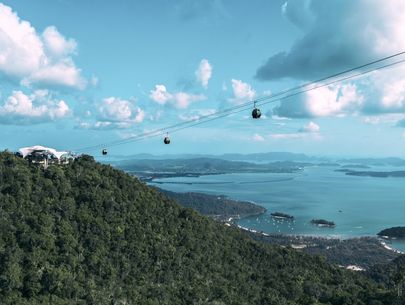
Malaysia’s west coast runs at its driest and clearest in December, January, and February, and the two best reasons to go are at opposite ends of the peninsula. Langkawi sits in the Andaman Sea far enough north to stay clear when the rest of the region is overcast; snorkel Pulau Payar Marine Park for blacktip reef sharks and parrotfish the size of dinner plates, then ride the cable car to SkyBridge, a curved walkway suspended high above a forested gorge with the sea spreading south below the treetops. Penang, two hours south by ferry, is a UNESCO-listed old town and arguably the finest street food city in Southeast Asia: the char kway teow at a Lorong Baru hawker center, flat rice noodles wok-fried over flame so high the wok smokes, is the dish most Penang obsessives flew back for.
India

December through February is when India’s south comes into its own, and Kerala is the reason to go first. The backwaters around Alleppey move at their own green, unhurried pace — houseboat journeys through paddy fields and coconut groves, the water so still in the early morning you can hear the birds in the reeds before you see them, the air carrying cardamom and woodsmoke from the villages along the bank. The spice markets of Kochi, the cliff-top temples at Varkala, the tea estates rolling up into the Western Ghats at Munnar — Kerala alone is a full trip. Further north, Rajasthan turns golden in the winter light: Jaipur’s pink-walled old city, the desert fort at Jaisalmer rising from the sand, and the blue painted streets of Jodhpur at dusk. The Taj Mahal in Agra, visited at dawn in February when mist sits on the Yamuna River behind it, is the other image of India that stays with you long after you’ve come home.
Blossom and the Mountains: March to May
South Korea

South Korea’s cherry blossoms arrive about two weeks after Japan’s, which makes combining the two on one trip completely practical if you follow the sakura front north. In Seoul in early April, Gyeongbokgung Palace stops you: the Joseon dynasty’s largest royal complex framed by flowering trees; guards in deep blue and red robes changing shift before the tiled pavilions; and the modern city rising just beyond the ancient walls as if two entirely different centuries agreed to share the same skyline. Then take the train south to Jinhae for the Gunhangje Festival, the country’s largest blossom celebration, where the old railway station concourse disappears under a tunnel of white and pink, and the harbor streets fill with the smell of frying batter and the sound of live music until long after dark. The yangnyeom chicken from the stalls, fried, glazed with gochujang and garlic, eaten with cold beer, is the thing most people are still thinking about on the flight home.
Vietnam

Spring is Vietnam’s most atmospheric window — the north warming after winter, the south dry and luminous, and the whole country at its most alive before the summer heat arrives. In Hanoi, the streets around Hoan Kiem Lake are wreathed in morning mist, the shophouses lean toward each other across narrow lanes, and ca phe trung (egg coffee, thick and sweet as a dessert) is drunk standing up at a pavement counter before the city fully wakes. On Ha Long Bay, the limestone karsts emerge from the water in the early light like something the sea hasn’t quite finished with — a place that still manages to feel genuinely remote even though you’ve seen the photographs a hundred times. Further south, the ancient town of Hoi An glows amber at night under its famous lanterns, and the Mekong Delta moves at its own unhurried pace, the river’s whole economy playing out on sampans piled with pomelos, dragon fruit, and bundles of water spinach before sunrise. Vietnam doesn’t ask you to choose between history, landscape, and food. It gives you all three before lunch.
Summer in Asia: June to September
Indonesia and Bali

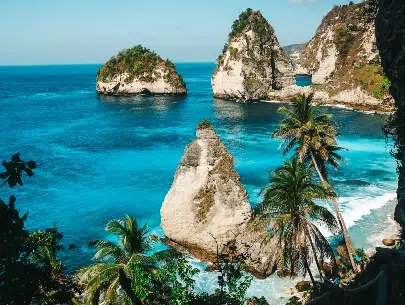
In the months of June through September, Bali settles into its finest rhythm — the Tegalalang rice terraces north of Ubud glowing in the clear morning light, the surf at Uluwatu running at its most consistent, and the roads and temples alive with processions and ceremonies driven entirely by the Balinese Hindu calendar rather than the tourist one. Spend a morning at Pura Tirta Empul, a 10th-century spring temple where purification rituals in the sacred pools have continued for over a thousand years, then eat babi guling (slow-roasted suckling pig with turmeric and galangal) at a warung on the back streets of Ubud. The same window is the finest time to go further into the Indonesian archipelago — specifically Komodo, where the dry season brings calm seas, exceptional visibility, and the dragons at their most active and visible. The island sits in the Flores Sea east of Bali: a national park of volcanic ridges, pink sand beaches, and turquoise bays, patrolled by Komodo dragons, the largest lizards on earth, that move through the scrubland with the unhurried authority of something that has never needed to be afraid of anything. Two or three nights on a traditional phinisi boat, anchored in a different bay each evening with only the stars and the lantern at the stern, and Komodo stops feeling like a side trip and starts feeling like the whole point.
Borneo

Borneo in June through September is as layered a destination as Asia has; rainforest, river, reef, and wildlife, all within reach of each other. The ancient rainforest of Sabah is among the oldest in the world, and the Kinabatangan River that runs through it is one of the finest wildlife corridors in Asia: drift along it at dusk and pygmy elephants graze the banks, proboscis monkeys crash through the canopy to their overnight roosts, and crocodiles hold perfectly still in the shallows as the light drops. At Sepilok, orangutans move between the trees with a slow, deliberate grace that stops most people cold, and offshore, the reef walls at Sipadan drop into open ocean so clear and so alive with turtles, manta rays, and barracuda that every other dive feels like a warm-up.
Sri Lanka — East Coast

While the southwest coast sits under monsoon from May through September, Sri Lanka’s east coast flips to its dry season exactly now: the beaches around Trincomalee run wide, pale, and largely empty; the bays are calm enough for snorkeling over coral and a British WWII shipwreck in the same afternoon; and between May and October, blue whales feed in the Trincomalee Canyon offshore as cold, nutrient-rich upwellings from the deep trench draw them in. Further south, Arugam Bay is a long right-hand point break working at its best from June through September, a small, warm town where rice and curry arrive on a banana leaf at 7 a.m.: three sambols, a fried egg, a curl of coconut, and tea so strong it needs the milk and a moment of quiet to make sense of itself.
Ladakh, India

Ladakh opens from June through September — sealed by snow for the rest of the year and accessible only when the Himalayan passes clear — and the landscape it reveals feels like nowhere else on earth. A cold desert perched between the Himalaya and the Karakoram: pale ridges, turquoise rivers fed by glacial melt, and monasteries carved into the rock above valleys so wide and bare they seem to belong to another planet. Fly into Leh (the flight from Delhi passes directly above the Karakoram, so take a window seat), acclimatize for a day, then go to Thiksey Monastery at 6 a.m. for morning puja: monks in the main hall at dawn, the room filling with the low drone of horns, hand drums, and the smell of yak butter candles. An hour that quietly changes the way people understand the rest of the trip.
Hokkaido, Japan

While the rest of Japan swelters through a humid summer, Hokkaido stays cool, green, and blissfully uncrowded. Japan’s northernmost island is a completely different country from Kyoto and Tokyo — vast national parks, open farming valleys, and coastline that stretches in both directions without a building in sight. In July, the lavender fields of Furano turn the landscape a deep, improbable purple, the rows running up toward forested hills under wide blue skies. The food is exceptional in a way even Japan’s high standards don’t quite prepare you for: Hokkaido dairy and seafood are considered the finest in the country — butter-rich corn, sea urchin eaten straight from the shell at Hakodate morning market, and ramen so good that people fly up from Tokyo specifically for the bowl. Summer in Hokkaido is Japan at its most unhurried, and one of Asia’s most underrated windows.
Golden Days: October and November
Japan

We’d choose Japan’s autumn foliage over cherry blossoms, and that’s a genuine opinion, not a contrarian one. The koyo season runs October through November, and in Kyoto in late November the maple forest at Tofuku-ji turns scarlet and deep orange, and from the Tsutenkyo bridge, the valley below is pure fire, the color running unbroken from the temple walls to the treeline, the afternoon light low and amber through the canopy above you. In Nara, 45 minutes south, the great park around Todai-ji glows under turning ginkgos while 1,000 sika deer, considered divine messengers in Shinto tradition, move among the falling leaves and thousand-year-old shrine buildings as if the setting were entirely unremarkable. A bowl of ramen at a counter seat in a machiya townhouse, autumn cold pressing at the door—that is what the trip is for.
Nepal

Mid-October through November is Nepal’s finest window; four months of monsoon rain have scrubbed the atmosphere completely clean, and the Himalaya stand in a clarity that simply doesn’t exist at any other time of year. Start in Kathmandu: the medieval courtyards of Durbar Square, butter lamps burning at the golden Boudhanath stupa at dusk, the smell of incense and marigold garlands drifting from every temple doorway. From there, the country opens up in every direction. Pokhara sits on a glassy lake with the peaks reflected in the still water each morning, a town that manages to be both a serious trekking base and one of the most relaxed places in Asia to simply sit and watch the mountains. The trails above it wind through rhododendron forest and past stone villages where yak bells carry across the valley and teahouse fires burn through the night. Nepal has a way of making the world feel big and quiet at the same time, and autumn, when the sky is at its deepest blue and the high passes are clear, is when that feeling is strongest.
Bhutan

October and November bring Bhutan’s tsechu festivals, days of masked cham dancing in monastery courtyards, elaborately costumed monks enacting Buddhist teachings on merit and karma to the boom of drums and the long, mournful call of horns, but the festivals are only part of what makes this window the finest time to visit. The post-monsoon sky is at its clearest, and the Himalayan peaks that frame the country’s northern border stand in sharp relief above the valleys. The hike to Tiger’s Nest, the monastery clinging impossibly to a cliff above Paro, is at its most beautiful now, the pine forest golden, the air thin and cold, prayer flags snapping in the wind above the drop. Down in the Bumthang valley, the buckwheat harvest is in and the air carries pine smoke from every farmhouse. Eat ema datshi — fresh chilies cooked in yak cheese until the cheese liquefies into something between a sauce and a fondue — with red rice grown right there in the valley.

COPYRIGHT © 2026 UNFORGETTABLE TRAVEL. ALL RIGHTS RESERVED
©2026. Travel + Leisure® is a registered trademark of Travel + Leisure Holdco, LLC, a subsidiary of Wyndham Destinations, Inc. Travel + Leisure® World’s Best Awards is used under license. Travel + Leisure® is published by TI Inc. Affluent Media Group, a Dotdash Meredith company, which is not affiliated with Wyndham Destinations, Inc. or its subsidiaries.